
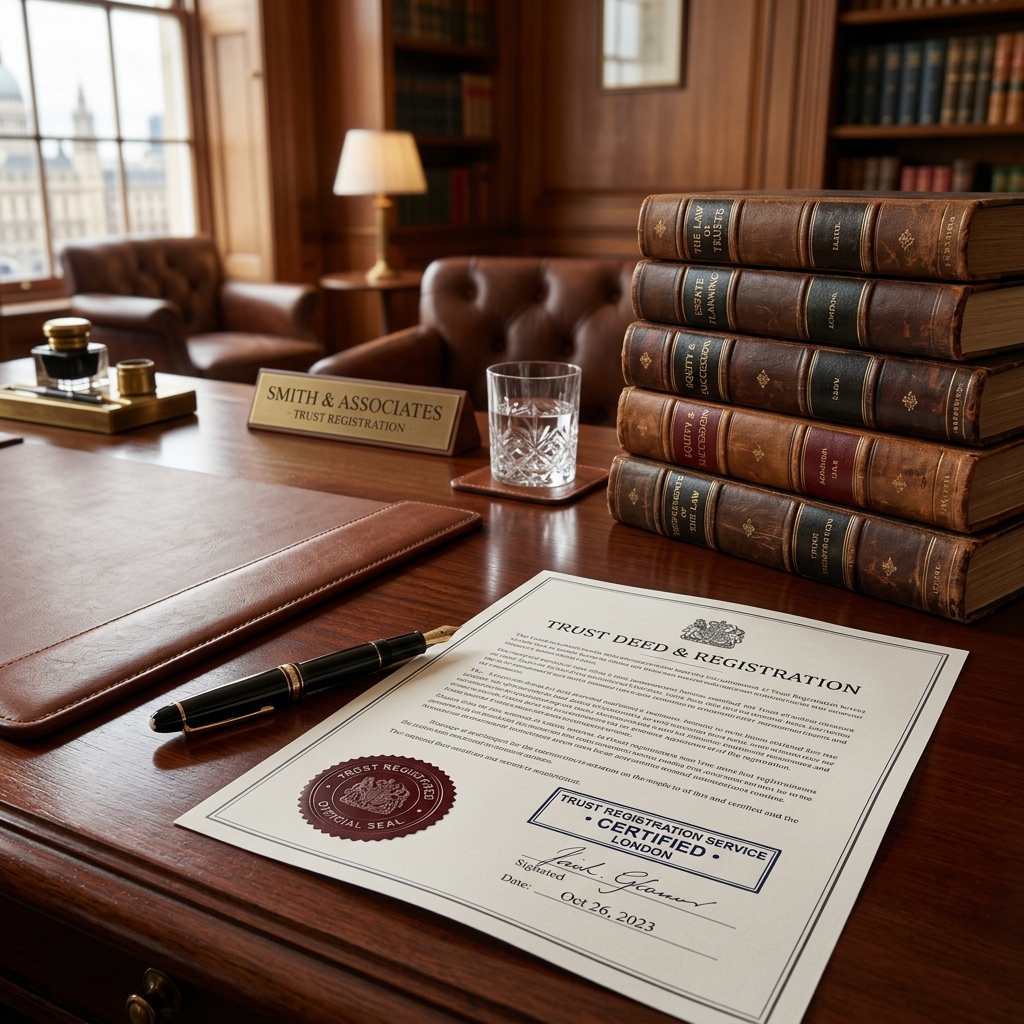
Trust Registration
Get expert assistance for trust registration in India. Professional CA and legal services with complete documentation support.
Overview of Trust Registration
Drafting a trust deed that outlines the settlor, trustees, beneficiaries, and assets; choosing trustees; and finally registering the trust with the appropriate government agency or regulatory body by submitting the necessary paperwork and fees. After the trust is registered, assets are transferred to it and compliance with reporting requirements, including filing tax returns and financial statements, is guaranteed. It is advised to review and update the trust on a regular basis. Obtaining legal counsel during the process is also advised in order to manage the complexities of trust law and fulfill duties in accordance with jurisdiction-specific regulations.
Documents Requirement
To register a Trust in India, several documents are required. The documentation process involves both personal and office-related information. Here is a list of essential documents:
Member’s/Trustee/Settlor Documents
- Passport-sized photograph
- PAN Card
- Aadhar Card
- Proof of Residence (Bank Statement, Electricity Bill, Telephone Bill)
Registered Office Documents
- Proof of Registered Office Address (Conveyance/Lease Deed/Rental Agreement)
- Electricity Bill (not older than two months)
- No Objection Certificate (NOC) from the property owner
Our Service Commitments
Expert Legal Guidance
Direct assistance from seasoned legal counselors and trademark specialists to navigate complicated compliance procedures smoothly.
Guaranteed On-Time Filing
We respect your timeline. All submissions, counter-statements, and forms are filed strictly before government deadlines to prevent rejection.
100% Transparent Costs
Completely transparent pricing. We provide clear invoices showing breakups of professional fees and government charges with zero hidden costs.
Secure Document Vault
Your corporate credentials, deeds, and identification documents are fully protected using industry-grade data security protocols.
Steps for Trust Registration

Stress-Free Compliance
Choose the Trust Type
Select the trust type that best meets your requirements, such as an irrevocable or revocable trust, a charity trust, or a special needs trust.
Draft the Trust Deed
Produce a formal legal document that serves as the trust deed, outlining the terms and conditions of the trust, as well as the assets that are being put into the trust and the identity of the beneficiaries, trustees, and settlor.
Choose Trustees
Trustees are responsible for managing the trust in accordance with the provisions outlined in the trust deed. They can be reliable people or organizations.
Identify Beneficiaries
List the people who will gain from the trust and give a detailed account of their rights and privileges as stated in the trust deed.
Register the Trust
To formally register the trust, submit the required documentation to the relevant regulatory body or government agency. This usually entails delivering the trust deed and covering any necessary registration costs.
Get a Tax Identification Number
In order for the trust to comply with tax reporting requirements, you might need to get a tax identification number, depending on the jurisdiction and the kind of trust.
Transfer Assets to the Trust
Give the trust legal ownership of the assets listed in the trust deed. This might apply to bank accounts, real estate, investments, or other priceless possessions.
Respect Reporting Requirements
Make sure you are following any continuing reporting guidelines set forth by the country in which the trust is registered. This could entail submitting tax returns and annual financial statements or other documentation
Trust Review and Update
Make sure the terms of the trust are still meeting the needs of the beneficiaries and complying with all applicable laws and regulations by periodically reviewing the terms. The trust deed should be updated or modified as needed.
Get Legal Advice
To make sure that all legal requirements are satisfied and that the trust is structured appropriately for your particular circumstances, it is advisable to obtain guidance from a qualified legal professional who specializes in trust law throughout the trust registration process.